
AI agents
Agents that own the process, not just the chat.
We build agents that do real work inside real constraints.
── Pods deployed with ──








What we do
Triggers to outcomes
From an inbound call or a plain-English brief to a booked job or a finished workbook.
Tool use
Agents read and write the systems you already run: CRM, diary, storefront, spreadsheets.
Named gates
It drafts, a person sends. Autonomy is a design decision, not a default.
Audit trails
Every action logged, every claim traceable to its source.
How we do it
- 1
Map the process
The workflow, its tools, and where judgment sits.
- 2
Build the harness
Context, permissions, and checks around the model.
- 3
Evaluate
Measured against a test set before it carries load.
- 4
Gate and launch
Autonomy grows as the error rate earns it.
We engineer agents for reliability first.
A real harness
Context, conventions, and checks built for your stack.
Evaluation first
We measure the agent before it carries load, and keep measuring after.
Failure paths
What happens when it is wrong is designed, not discovered.
Cost control
Model spend engineered like any other cloud bill.
What you'll achieve
Work that finishes
A trigger becomes an outcome: an inbound call becomes a booking, a brief becomes a finished workbook.
Autonomy that is earned
The agent drafts first, and gains scope as the measured error rate earns it.
Running costs you can see
The buy-side origination engine runs at £4,800 a year across 15 mandates, and the number is published.
Case studies
We have done this before.

7 → <1 analyst days to build a longlist
Systematic buy-side origination, built inside PCB Partners
Read the case study
Automotive retail
24/7 every call answered, including out of hours
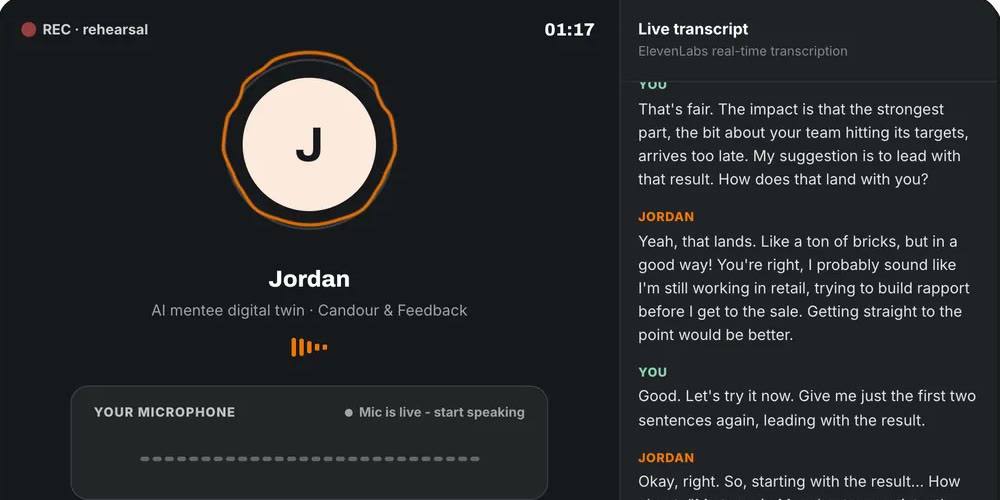
Hey, we built Aria, the future of agentic telephony
Read the case study
11,000/min applications hitting LinkedIn, up 45% year on year
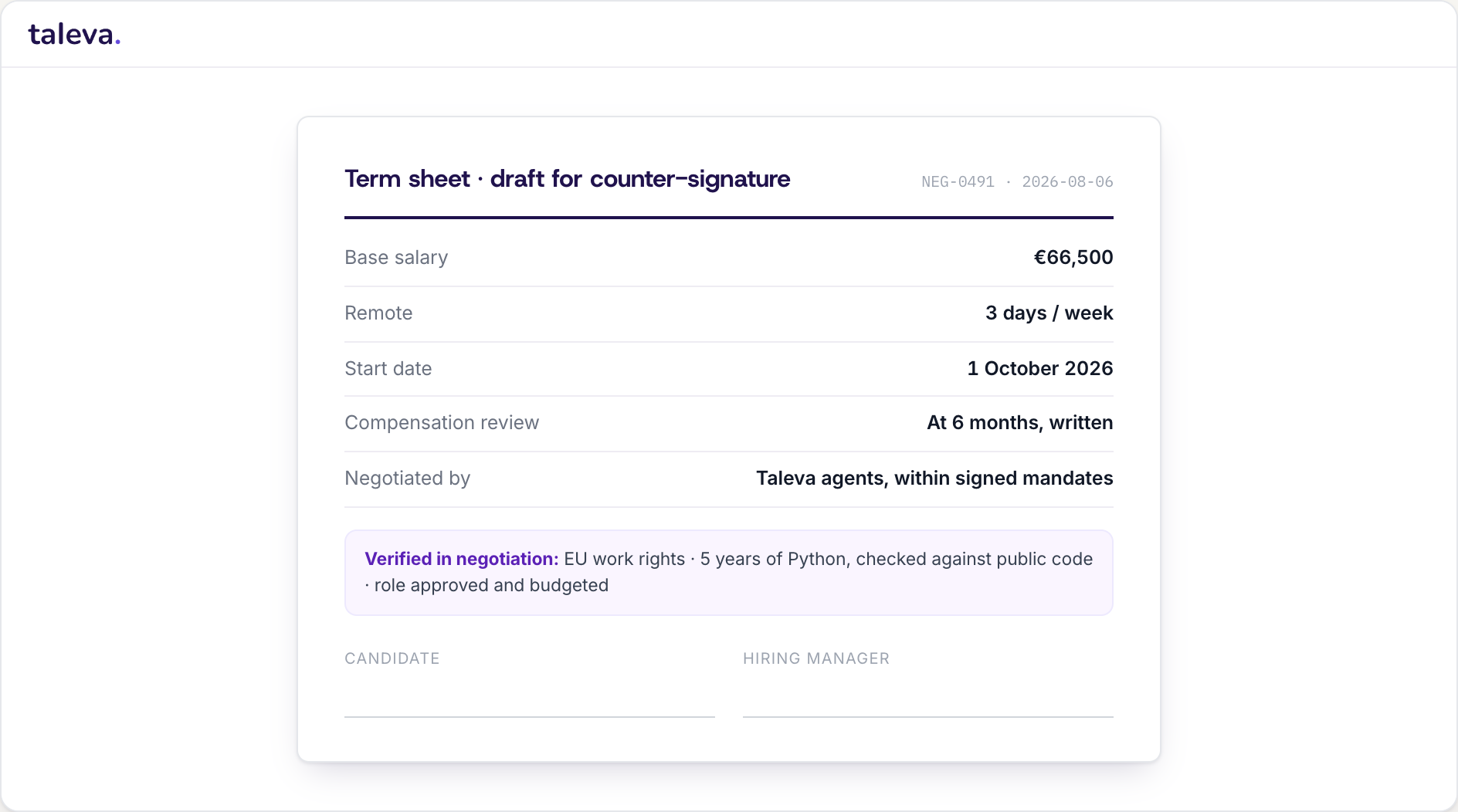
Agent-to-agent hiring: a negotiation layer for the talent market
Read the case study
Common questions
Which processes are worth giving to an agent?
Repeated, rule-bound work with clear inputs and a checkable output. Origination research, inbound calls, quoting, and document preparation are typical. Judgment calls stay with people.
How do you stop an agent doing something it shouldn't?
Permissions, named human gates, and logging. Our agents draft rather than send where an action is irreversible, and they cannot touch systems they were not given.
What does an agent cost to run?
Usually a model seat and some infrastructure. Our published case studies carry real running costs: the buy-side origination engine runs at £4,800 a year across 15 mandates.
Tell us what you need built.
A 20 minute call is enough to work out whether a pod fits. The first week of work is defined on that call.
As seen in