

1
Registration-process time fell by 80%
The production system streamlined registration work and was delivered two months earlier than expected.
We built Dongchu's entire system, including an NMPA route and dossier constructor. A 2–5 person Algosoup team completed the engagement from June to July 2026, delivering in one month against an original expectation of three months.
“Algosoup streamlined our registration process, which now takes much less time. We’ve seen an 80% time reduction.”
2
The route starts with intended use and the exact product configuration
Whether a scientific instrument falls under the NMPA medical-device pathway depends on its proposed claims, samples, users, setting and configuration.
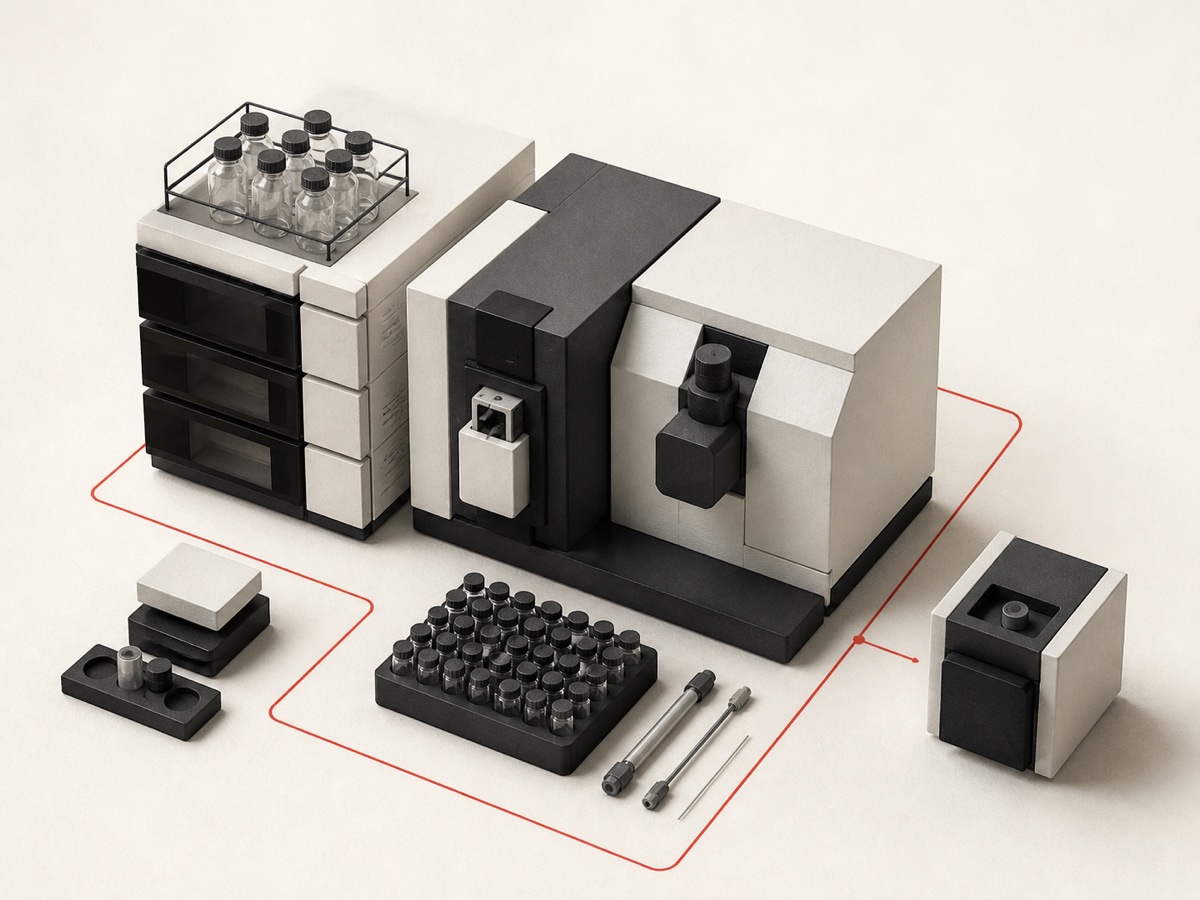
The workspace begins by locking the proposed China intended use and product configuration. A qualified regulatory owner then records the applicable route and the evidence behind it. The fictional example shown here is a triple-quadrupole LC–MS/MS system intended for quantitative testing of human samples. The current Chinese classification catalogue points to an imported Class II medical-device registration route. That example cannot be generalised to every analyser or research-use configuration.
The route record also separates the foreign applicant, its appointed enterprise legal person in China, Dongchu's coordination role and any specialist reviewer. The software can retrieve relevant catalogue entries and expose ambiguity; it does not make the legal classification decision.
- Controlled scope
- Intended use, claims, models, software, accessories and reagents are written down before a dossier plan is created.
- Route evidence
- The catalogue entry, guidance, assumptions and unresolved questions stay attached to the decision.
- Named authority
- A qualified regulatory owner approves the route and any escalation for official classification.
3
Foreign-language evidence stays linked to controlled Chinese submission text
Chinese submission material is required, and translated foreign-language material must be accompanied by its original.
The control applies to translated or derived Chinese records; it does not require a word-for-word Chinese twin for every source file. Each controlled Chinese record points to the approved source, translator, reviewers, terminology and dossier destination. Repeated identifiers and claims, including model names, intended use, warnings and accessory scope, can then be checked across the package instead of being reconciled from memory.
The manufacturer remains the source owner. Dongchu and specialist reviewers can coordinate the China version without turning the workspace into a second, competing quality-management system.
Traceability across the handoff creates the product value.
4
AI prepares cited drafts under human approval gates
The workspace places bounded assistance inside a controlled review process, with regulatory judgement reserved for qualified people.
The production workflow can use approved product language and a controlled glossary to prepare first drafts of dossier text, evidence requests and change-impact notes. Material statements should carry a source record and location. Missing or conflicting support should be surfaced for review and left unresolved.
Every output remains a draft until the appropriate bilingual, technical and regulatory reviewers record their decision. Model output must never set an approved, applicable, ready or submitted state. Imported documents remain untrusted evidence, and their contents stay isolated from system instructions.
AI proposes and cites. Qualified people review, approve and remain accountable.
5
A curated requirement baseline turns missing evidence into owned work
A checklist is only defensible when its source, effective date, applicability decision and owner are visible.
The design maps the current official dossier structure and product-specific guidance to evidence records. Deterministic checks can identify missing signatures, stale versions, absent source links and inconsistent identifiers; AI may help extract and compare content. A regulatory owner still decides whether a requirement applies and whether the evidence is sufficient.
Each confirmed gap records what it blocks, who must resolve it and what evidence closes it. That creates useful operational visibility while the regulatory owner retains responsibility for determining dossier sufficiency.
6
Official changes open owned impact assessments
The workspace prepares and monitors; authorised people submit through official channels and retain the receipt.
The design maintains a versioned register of official rules, service pages, catalogues, guidance and standards. A source change opens an assessment for the regulatory owner to determine the affected products and records. Because official sites and formats can change, source monitoring needs a manual-review fallback and must never silently alter approved content.
- NMPA service portal
Submission and official product-record entry point
Link out; never imitate or automate it.
- Registration and filing rules
Route, language, agent, review and change duties
Version and map each provision to an owner.
- Submission dossier requirements
Official dossier headings and evidence expectations
Export to the official structure; keep source originals.
- Medical-device classification service
Official route for a new or category-ambiguous product
Treat classification as a regulatory decision, not a model prediction.
- Clinical laboratory device catalogue
Classification entries for clinical mass spectrometry and chromatography
A product name alone does not establish the route.
- Triple-quadrupole LC–MS/MS guidance
Product-specific CMDE expectations for scope, performance and intended use
Guidance evidence; the final route stays under human approval.
- Cross-border data rules
Boundary for personal, important and ordinary business data
Assess the actual data flow before enabling foreign access.
- Revised medical-device GMP
Published QMS baseline · effective 1 November 2026
Open an owned transition assessment.
7
The opportunity is a China-specific collaboration layer
Established platforms already cover submissions, registrations, publishing, change impact, regulatory intelligence and AI-assisted authoring.
Veeva, Rimsys and Ennov already market much of the broad feature set. The narrower opportunity is the cross-company China handoff: a product-scoped workspace for a foreign manufacturer, its appointed China agent, Dongchu, translators and specialist reviewers when occasional collaborators cannot practically work inside the manufacturer's enterprise RIM.
The production build focuses on the specific handoff left between those systems: source-to-Chinese traceability, NMPA-specific route and dossier views, controlled partner access, gap resolution and export back to the manufacturer's system of record. For organisations considering the same investment, an incumbent configuration or controlled service workflow may still be the better choice.
Observed handoff friction should determine whether the layer gets built.
8
Production use begins with an explicit data and security boundary
Storage location alone does not settle confidentiality, personal-data or cross-border-access questions.
Before live evidence enters the system, the parties need to classify the data, map who can access it, including overseas support and model providers, and agree purpose, retention and deletion. The implementation baseline should include least-privilege access, encryption, audit logs, tenant separation, approved model endpoints and a commitment that customer data is not used to train public or shared models.
China's cross-border rules depend on the actual data and flow. The software can enforce an agreed boundary, but legal and data owners must determine which transfer mechanism or exemption applies; blanket claims that all material must stay in China, or may freely leave it, would both be unsafe.
Need to make a regulated handoff auditable?
We can research the workflow and build the production control layer with your regulatory lead. Product classification and final regulatory decisions remain with qualified, authorised people.